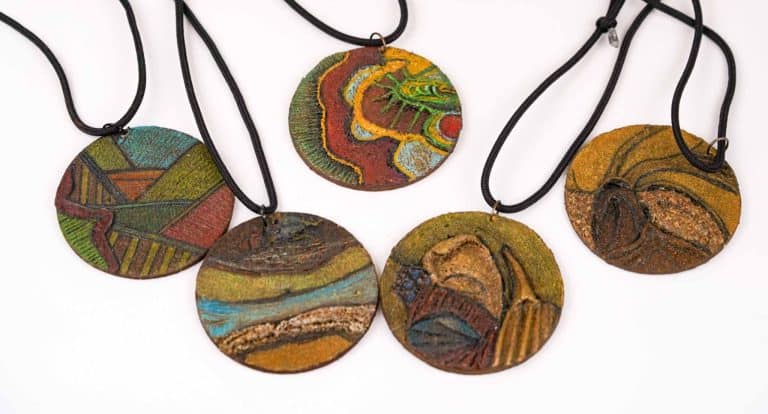
Clay has always been at the centre of human creativity, but Euclay offers something new — and distinctly Australian. Unlike traditional clays dug from the earth, Euclay is made from the dried leaves of eucalyptus trees: Cinerea, Marri, Jarrah and Lemon Myrtle. These leaves are carefully pulverised, then blended with other components to form a clay that air-dries without the need for firing.
This innovation brings together sustainability, accessibility, and natural character. Because it requires no kiln, Euclay opens doors for artists, schools and communities who might not have access to specialised equipment. Its flexibility is remarkable: it can be smooth or coarse depending on the size of leaf particles, shaped by hand, carved when dry, and painted with acrylics. It also adheres well to surfaces like ceramic, wood, fabric, paper, glass and MDF.
But what truly sets Euclay apart is its connection to place. Eucalyptus is an Australian icon, and in Euclay its presence is tangible: in the earthy tones, in the subtle textures, even in the fragrance of the material itself. Working with Euclay means quite literally working with the Australian landscape.
The clay was developed by Carmen Tyrer, a multidisciplinary artist with a passion for experimenting with natural and reclaimed materials. For Carmen, Euclay is not only a medium but also a philosophy — a way to honour the land while creating art that feels grounded and organic. Her sculptural works often highlight the expressive potential of the clay, from busts and masks to richly textured forms that celebrate imperfection.
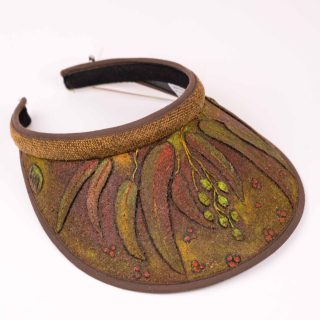
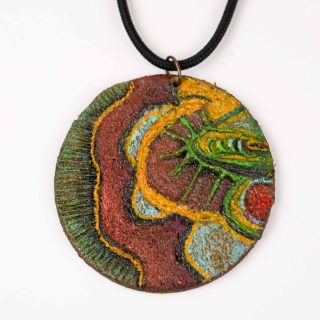
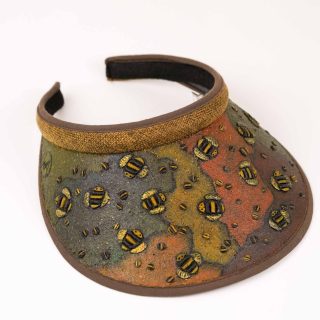
Alongside her, Jennifer Miller has been exploring Euclay’s versatility in surface design and mixed media. She experiments with its textures on journals, decorative objects and artworks, pushing the material to reveal new finishes and applications.
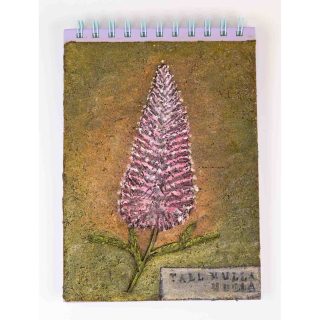
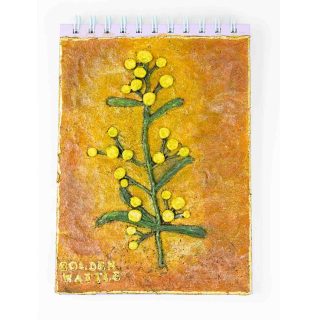
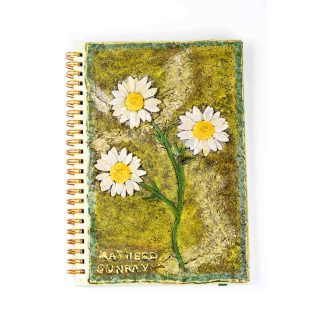
Together, Carmen and Jennifer show how one material can speak in many voices — robust and sculptural, delicate and decorative.
Euclay’s name reflects its dual heritage: “eu” from eucalyptus, and the Greek prefix meaning good or well. It is both a tribute to its botanical roots and a nod to the positive, sustainable direction it represents for artists today.
This October, during WEDGE – The Australian Ceramics Triennale Fremantle 2025, you’ll be able to see and experience Euclay firsthand in our special window display, where sculptures created in this unique medium are on show. It’s a rare chance to discover not only a new kind of clay, but a new way of thinking about art materials — natural, innovative and unmistakably Australian.